I used to skip bringing dedicated seating on short hikes and car camping trips. My logic was simple: why carry extra gear when I can sit directly on rocks or grass? That mindset changed after one cold spring trip. I sat on a damp boulder for less than 30 minutes, and the chill seeped straight through my pants. My hips were sore for hours afterward.
That’s when I started testing small foldable camping seat cushions. I wanted something light enough to toss in my daypack, not bulky, and able to block cold, wet ground. After trying several cheap and mid-range options over a few camping weekends, one model stood out from the rest.
This review shares my real-world experience, the pros and cons, what to look for before buying, and who this cushion is best suited for.
First Impressions & Unboxing
When it arrived, I was surprised how thin and lightweight it felt. The cushion folds down into a compact rectangle, roughly the size of a large smartphone. It came with a small fabric carry sleeve, which keeps the folded layers from popping open in my backpack.
The outer layer is 600D Oxford fabric. It feels tough to the touch, not the flimsy plastic-like material I’ve seen on cheaper pads. The core is closed-cell foam with a textured egg-crate pattern. One side has a thin reflective layer meant to stop cold from rising up from wet soil or stone.
At only about 80 grams, I barely noticed it in my daypack during a 6-mile day hike. That was a huge win compared with bulky camping stools, which add serious weight.
How It Performs Outdoors (Field Test)
I tested this cushion in three different scenarios: forest camping on damp ground, rocky mountain overlook, and a music festival on packed dirt.
On wet grass, the waterproof outer shell kept moisture away. I sat for nearly an hour and my trousers stayed dry. The foam thickness stops most of the cold coming up from the ground. It won’t feel like a couch, but it takes the sharp edge off hard stones so they don’t dig directly into your hips.
The egg-crate texture does a good job of distributing weight. I shifted around often while eating and chatting, and it didn’t creak or crack. Where it struggles is extremely jagged, sharp rock. If you sit directly on a pointy stone, it will still press through the thin foam. In that case, I just moved to a flatter spot.
Folding it back up takes a little practice. The first couple of times I fumbled the folds, but after three uses I could fold it and slide it back into its sleeve in under 30 seconds.
Pros & Cons
What I Liked
- Ultra-light and compact, fits easily into backpack side pockets
- Waterproof outer fabric blocks damp grass and light dew
- Egg-crate foam absorbs pressure from hard ground
- Simple design; no air pumps, no inflation needed, nothing to leak
- Multi-use: camping, hiking, outdoor concerts, fishing, park picnics
What Could Be Better
- It’s thin. Do not expect plush padding for long multi-hour sitting sessions
- Sharp rocks can still poke through if you pick a rough spot
- Over time, the fold creases become more noticeable (normal for foam pads)
- Not great for very cold winter camping; it blocks chill but not deep freezing ground
Foldable Cushion vs Camping Stool – Which Should You Pick?
A lot of new campers wonder whether to buy a foldable seat cushion or a small camping stool. Both have their place.
A camping stool gives full elevation off the ground and better hip comfort. But even lightweight stools add weight, take more pack space, and have metal legs that can bend if abused. They also sink into soft sand or mud.
This foam cushion weighs almost nothing, costs less, and packs tiny. The tradeoff is you’re still sitting low on the ground. I keep both in my gear kit: stool for car camping when space is not an issue, and this foam cushion for hiking and day trips where weight matters.
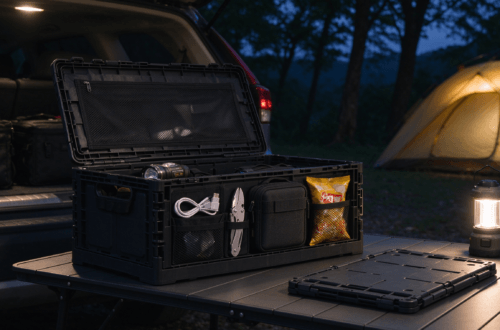
I usually keep this small cushion inside my collapsible camping storage box when packing for car camping trips.
Buying Guide – What To Look For In A Camping Seat Cushion
Weight & Pack Size
If you hike, prioritize anything under 120g. Heavier thicker cushions are more comfortable but defeat the purpose of portability.
Material
Closed-cell foam is the best choice. It won’t soak up water if it gets wet. Avoid open-cell foam; it absorbs moisture and stays heavy for hours. Look for a waterproof outer fabric like Oxford nylon.
Thickness
10mm to 20mm is the sweet spot. Too thin and it only works for dry, flat ground. Too thick and it becomes bulky to carry.
Durability
Check customer reviews for reports of tearing at fold lines. Cheap models often split along creases after a handful of trips.
Frequently Asked Questions
Can I use this cushion for winter camping?
It works for mild autumn and cool spring trips. For freezing ground, pair it with an insulated sleeping pad or choose a thicker high-R value foam model.
Is it easy to clean?
Yes. Wipe mud and dirt off with a damp cloth. Let it air dry fully before folding for storage. Don’t machine wash, this breaks down the foam layers.
Will it work on sand or beach?
Absolutely. It stops wet sand from touching your pants, and unlike chair legs, it won’t sink.
Final Verdict
This ultralight foldable camping seat cushion is one of those small, affordable pieces of gear that I now never leave home without for day hikes or quick overnight camps. It does not replace a full camping chair, but it solves the common problem of cold, hard ground when you just need a quick place to sit.
If you are a casual camper, day hiker, festival goer or fisherman looking for a lightweight backup seat, this is a solid pick. If you mostly do car camping and want maximum comfort, invest in a proper folding camping chair instead.